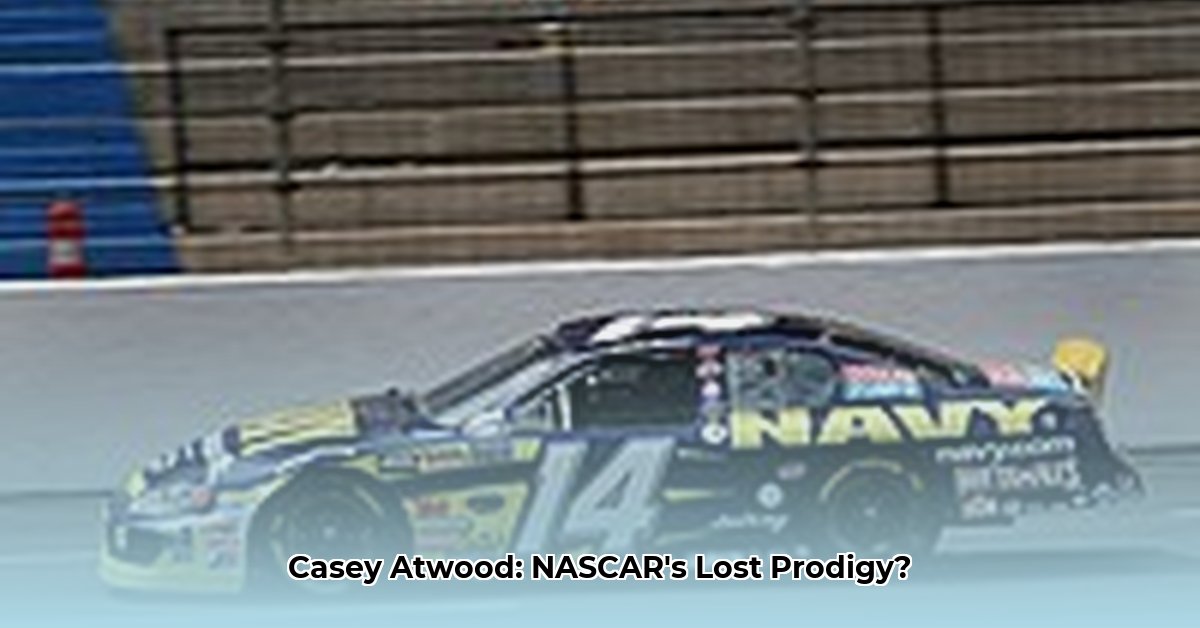
Casey Atwood. The name evokes a potent mix of awe and "what if?" He burst onto the NASCAR scene as a teenage prodigy, a whirlwind of speed and talent, achieving feats that still resonate within the sport's history. Yet, his trajectory, while initially meteoric, ultimately deviated from the championship-laden path many predicted. This isn't simply a story about dollars and cents; it's a compelling narrative of ambition, pressure, and the often-overlooked human element in professional racing. While his net worth remains a fascinating subplot, exploring his career's twists and turns offers a far richer understanding of the factors influencing success – and failure – in the demanding world of NASCAR.
The Early Blaze: A Teenager's Triumph
At just 17 years old, Casey Atwood clinched the youngest-ever Busch Series pole position. The following year, he added another unprecedented achievement to his record: the youngest-ever Busch Series race winner. The accolades poured in; he was hailed as NASCAR's next big star, a young gun poised to dominate. His association with Brewco Motorsports further amplified his visibility. The wins felt effortless, each a testament to his raw talent and seemingly boundless potential. Yet, even amidst this whirlwind of success, seeds of future hardship may already have been sown. Was the intensity of the spotlight, the relentless pressure to maintain such a rapid ascent, already beginning to take its toll? This early success raised an important question, one that would be answered later in his career: Could such intense pressure be sustained?
The Winston Cup Challenge: A Reality Check
The transition to the Winston Cup (now the NASCAR Cup Series) with Evernham Motorsports marked a pivotal shift. The competition intensified, the margins narrowed, and the pressure mounted exponentially. Atwood's performance in this phase, while lacking in readily available detailed statistics, undeniably illustrated the significant challenges he faced. The effortless victories of his earlier career gave way to a struggle for consistency, a humbling experience that underscored a critical truth in professional motorsports: raw talent alone isn't a guaranteed ticket to the top. It is a stark, and ultimately instructive, demonstration of how even the most promising careers can be derailed. Did the heightened level of competition expose underlying weaknesses in preparation or support?
The Mental Game: Confidence, Aggression, and the Internal Struggle
Subsequent Busch Series races offered a mixed bag: moments of brilliance offset by disappointing finishes. Armando Fitz, his owner at FitzBradshaw Racing, famously identified a critical component of Atwood's struggles: a lack of both confidence and on-track aggression. This wasn't simply a physical deficiency; it was a mental block, a persistent internal struggle that hindered his ability to perform. The team’s response—the engagement of a sports psychologist—highlights the profound impact of mental hurdles in high-stakes competition. The question arises: Did the immense pressure, combined with a potential lack of mentorship or support, magnify this internal struggle? This became a defining aspect of his career, profoundly impacting his performance and legacy.
Beyond the Track: Mentorship, Equipment, and the Broader Picture
Speculation naturally arises regarding other potential factors contributing to Atwood's career trajectory. Did he receive the necessary level of consistent, high-quality mentorship to guide him through the complexities of NASCAR's top tier? Moreover, did any inconsistencies in his equipment, potentially involving disparities between his car and those of more established drivers, play a significant role in his inconsistent performance? While the precise details remain elusive, these potential influences highlight the multi-faceted nature of success in professional motorsports, emphasizing the crucial role of both nurturing and resources.
Casey Atwood's Net Worth: A Financial Reflection
While the precise figure of Casey Atwood's net worth remains unavailable for public scrutiny, it's important to recognize that his financial situation is inextricably linked to the narrative of his career. His early achievements undeniably laid a strong financial foundation. Yet, the subsequent challenges undoubtedly shaped his financial trajectory as directly as his racing performance. It presents a complex and ultimately human story, one that reflects the uncertainties and disparities inherent in a sport where exceptional talent is not always a guarantor of sustained success. What, then, can we learn from the totality of his experience?
Lessons Learned: Beyond the Numbers
Casey Atwood's story offers compelling lessons that transcend the world of NASCAR, providing insights applicable to high-pressure environments across numerous fields:
The Crushing Weight of Pressure: The relentless pressure associated with early success can be a formidable obstacle to long-term achievement. Sustaining peak performance requires not just skill but also resilience and robust mental strategies.
The Importance of Support: A strong support system – comprised of mentors, coaches, and a team that nurtures both physical and mental well-being – is undeniably crucial for navigating the demanding challenges of professional sports.
A Holistic Approach to Athletes: Investing in the comprehensive development of young athletes, going beyond solely physical training and encompassing mental preparation, can significantly impact their ability to reach their full potential and navigate the complexities of a career.
The narrative of Casey Atwood serves as a potent reminder that the journey of an athlete, particularly in a high-stakes environment like NASCAR, is far more complex than statistics alone can reveal. It's a story of both remarkable triumph and poignant challenges, one that resonates deeply with the broader human experience of striving for goals, facing setbacks, and learning from both success and failure. His story, ultimately, is a testament to the resilience of the human spirit within the unforgiving landscape of professional motorsports.